

Moving with Pets in Australia: A Practical Guide
Moving with pets in Australia goes smoothly when you keep them calm and confined on the day, transport them safely in your own car, and update their microchip and council registration to the new address afterwards. In the lead-up, get dogs and cats used to their crate or carrier and keep their routine steady. On moving day, shut them in one quiet room or leave them with someone away from the noise, then move them last in a secure carrier or on a lead. Once you arrive, settle them into one room before giving them the run of the house. For interstate moves, check the rules for your destination first, as some states and territories have restrictions.
In the weeks before the move
The single biggest help is keeping your pet's routine as normal as possible while everything else changes. Feed, walk and play at the usual times even as the boxes pile up. Pack their area last so their bed, bowls and toys stay put for as long as possible, because familiar smells are reassuring when the rest of the house is being dismantled.
If your pet is anxious, it is worth a chat with your vet before the move. They can advise on calming aids, and for a long or interstate trip they can discuss whether any medication is appropriate. Make sure vaccinations and flea and worm treatments are current, and ask for a copy of records if you are also changing vets.
Getting dogs ready
Dogs pick up on packing and often get clingy or unsettled. Keep walks and mealtimes regular, and if your dog will travel in a crate or behind a barrier, set it up early and let them explore it with treats and a familiar blanket, so it feels safe rather than strange on the day.
Getting cats ready
Cats are strongly bonded to their territory, so a move tends to unsettle them more than most dogs. Leave the carrier out in the room several days ahead with the door open, a blanket inside and the odd treat, so it stops being the thing that only appears before a vet visit. A cat that will walk into its carrier calmly is far easier to manage.
On moving day, confine them first
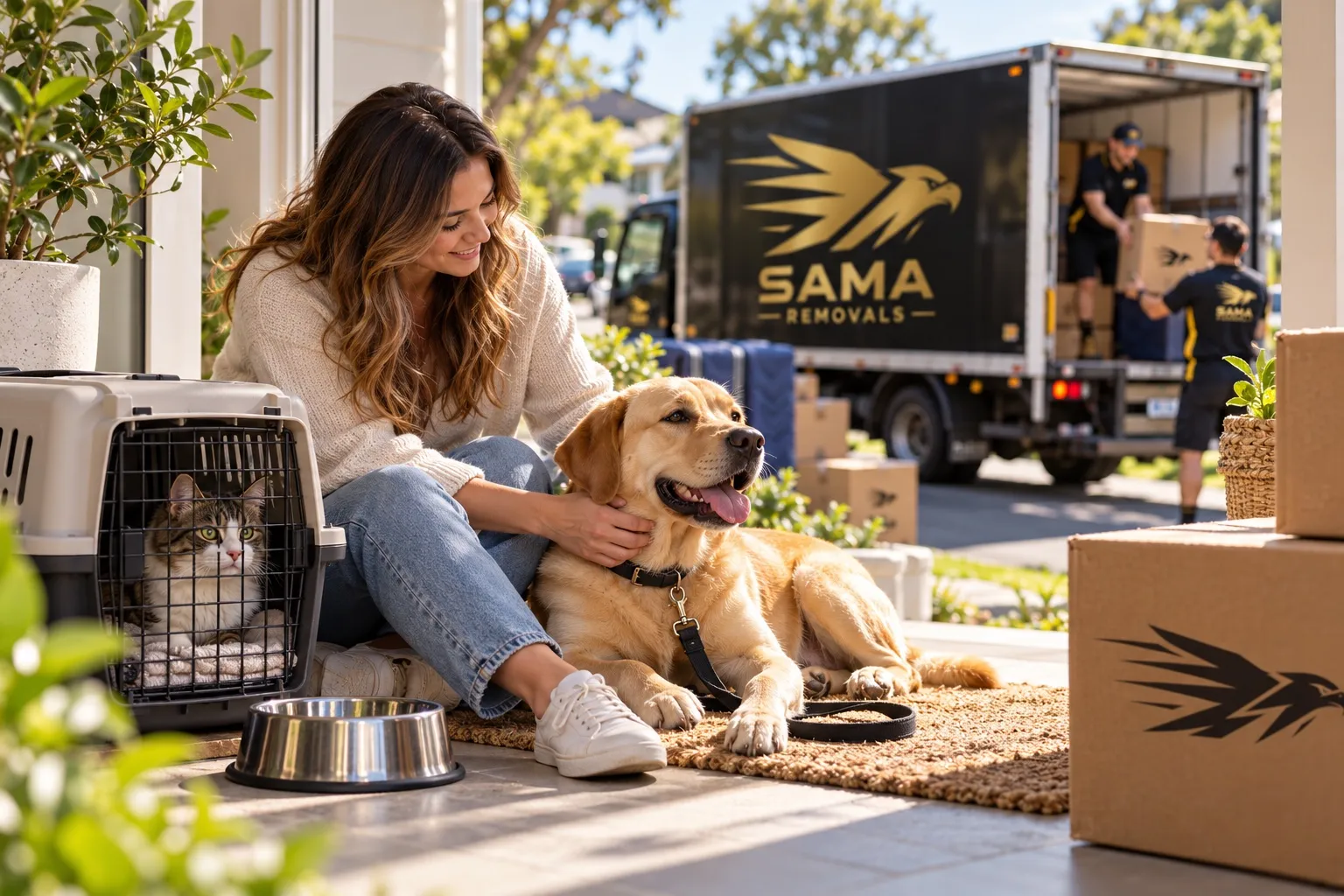
Before the crew arrives, settle your pet in one closed room the removalists will not need to enter, or arrange for them to spend the day with a friend, at daycare, or in a boarding kennel or cattery. Doors and gates stand open for hours during a move, and a frightened animal will bolt. A quiet room with their bed, water, a litter tray for cats and a familiar toy keeps them safe and out of the way of the heavy lifting.
Put a clear sign on the door and tell the crew that room is off-limits, so nobody opens it to clear boxes while your pet is inside.
Transport them safely
Move pets yourself in your own vehicle rather than in the removal truck, which is no place for an animal. Dogs should travel in a crate, behind a fitted barrier, or wearing a harness clipped to a seatbelt. Cats and smaller animals travel in a secure carrier. Never leave a pet in a parked car in warm weather, even briefly, because Australian heat builds dangerously fast inside a vehicle.
Take them on the last trip once the loading is done, and keep water handy for a longer drive.
Update the microchip and council registration
This is the step people forget. Your pet's microchip is only useful if the details on the registry are current, so once you have moved, update your address and phone number on whichever national database your pet is listed with. If your pet strays in the first confused weeks, that record is what gets them home.
Council registration is separate and is tied to where you live, so notify your new local council and update your pet's registration to the new address. If you have moved into a different council area, check whether you need to register with them, as requirements and fees vary between councils.
Settle them into the new home
Do what you did on packing day in reverse: set your pet up in one room first, with their own bed, bowls, toys and, for cats, a litter tray, before letting them explore further. Let them come out and investigate at their own pace over a few days rather than all at once.
Keep cats indoors for at least a couple of weeks so they learn the new house is home before they are let outside, or they may try to find their way back to the old one. Walk dogs on a lead around the new neighbourhood so they learn their patch. Keep feeding and walking times steady, and most pets settle within a week or two.
Moving interstate
Moving pets across state or territory borders can involve extra rules, and they vary depending on where you are going. Some states and territories have restrictions or requirements around certain animals, so check the rules for your destination well ahead and allow time for anything needed. Your vet is a good first port of call for what applies to your pet and your route.
Common questions
Should my pet travel in the removal truck? No. Pets should travel with you in your own car, in a secure crate, carrier or harness. The back of a moving truck is unsafe and frightening for an animal.
When do I update the microchip details? As soon as the move is final. Update your address and contact number on the national registry your pet is listed with, and separately notify your new council.
How long until my pet settles in? Most dogs and cats settle within one to two weeks if you keep their routine steady and let them adjust one room at a time. Cats usually take a little longer than dogs.
Can I move my pet interstate myself? Often yes, but some states and territories have restrictions, so check your destination's rules before you go and speak to your vet about a long journey.
Your pets rely on you to make the change feel safe, and a bit of planning does most of the work. If you would like the heavy part of the day handled while you look after them, tell us about your move and we will confirm the pricing and move plan with the crew and timing arranged around it.