

How to Pack a Kitchen for Moving
Packing a kitchen well comes down to working through it in zones, using small sturdy boxes for anything heavy, and protecting the fragile pieces properly. Wrap glasses and stemware individually and stand them upright, pack plates on their edge rather than flat, fill every gap so nothing shifts, and label each box with the room and whether it is fragile. Deal with the pantry, fridge and freezer in the days before, and set aside a small essentials box so you can make a cup of tea and a meal on your first night. Here is how to work through the whole room.
Get the right boxes and materials
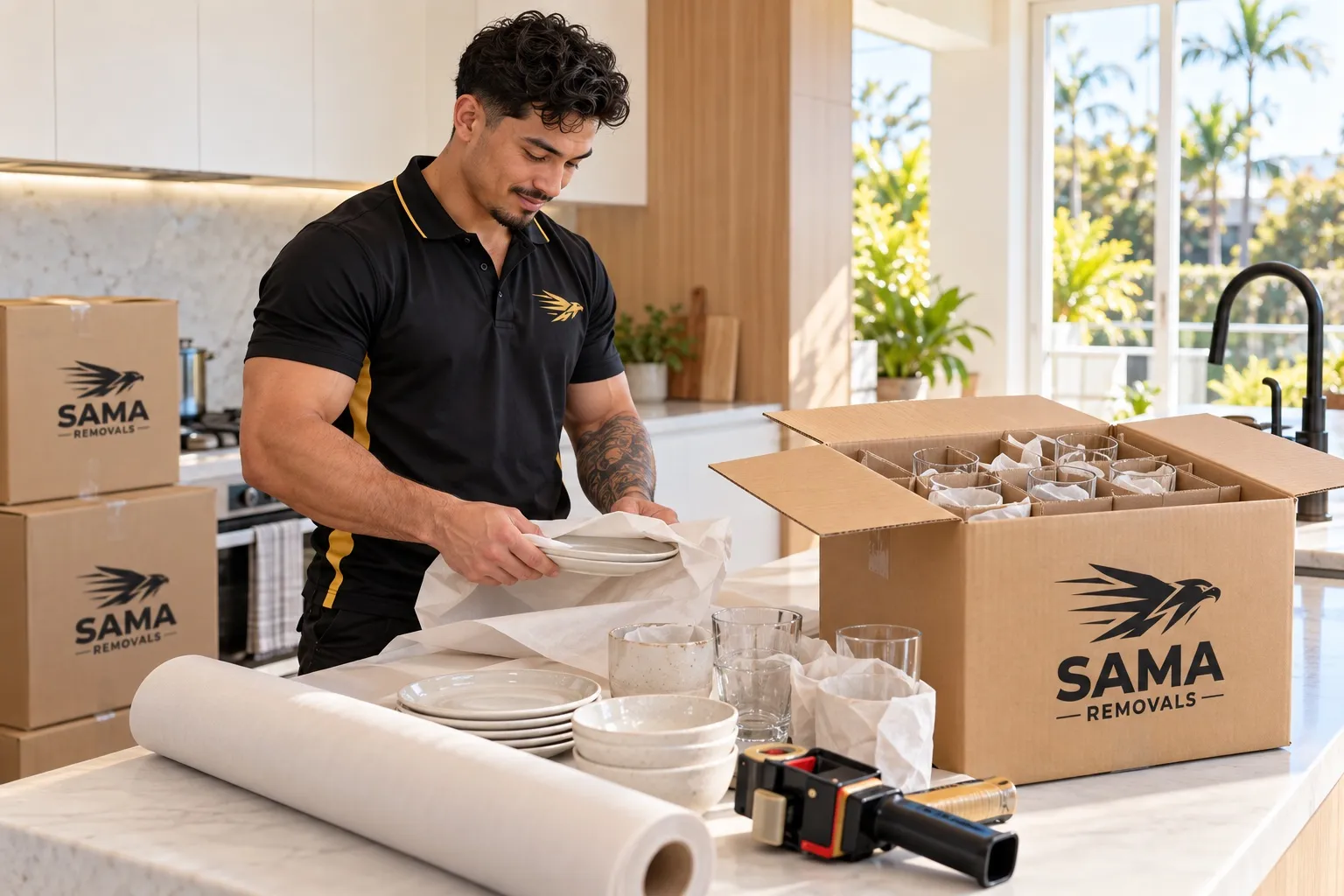
A kitchen needs small boxes far more than large ones, because crockery, tinned food and appliances are heavy and a big box quickly becomes too heavy to lift safely. Pick up a stack of small and medium boxes, a couple of large ones for light bulky items, and more packing paper than you think you need. Butcher's paper or plain newsprint is ideal because it does not leave ink on your dishes. Add a roll of bubble wrap for the most delicate pieces, strong packing tape, and a thick marker. If you can get dish-pack cartons with cardboard cell dividers, glassware travels far better in them.
Pack plates on their edge, glasses upright
Plates survive a move best when they stand on their edge like records in a crate, not stacked flat. Wrap each plate in paper, group a few together, and stand them vertically in a small box padded with scrunched paper at the base and sides. Bowls can be wrapped and nested in small stacks. Glasses and stemware are the most fragile things in the room, so wrap each one on its own, pad inside the tall ones, and stand them upright rather than lying them down. Cell dividers stop them knocking together. Fill any remaining space with paper so nothing can move when the box is carried.
Pots, pans and bakeware
Pots and pans are sturdier, so they can go in a medium box with the heaviest at the bottom. Nest smaller pans inside larger ones with a sheet of paper between each to stop scratches, and wrap lids separately or slot them down the side. Baking trays and chopping boards can stand on their edge along one side of the box. Keep the total weight sensible so the box is still liftable when it is full.
Small appliances
The kettle, toaster, blender and coffee machine travel best in their original boxes if you kept them. If not, empty and dry each one first, wrap it in paper or bubble wrap, and coil the cord neatly against the body so it does not catch. Remove or tape down loose parts like blender jugs and glass carafes and wrap those separately. A microwave can go in a medium box padded on all sides.
Run down the pantry, fridge and freezer
Start eating through the freezer and fridge in the week or two before the move so there is little left to deal with. Anything perishable that will not survive the day is better used up or given away than packed. For the pantry, seal opened packets in zip-lock bags or tape them shut, stand bottles of oil and sauce upright inside a lined box in case of leaks, and pack tins in small boxes because they are heavy. A fridge or freezer needs to be emptied, defrosted and dried well ahead, since it should not be run or laid flat until it has stood upright again at the other end.
Knives and other sharp items
Wrap knife blades in several layers of paper, or slide them into a knife guard or a folded piece of cardboard taped closed, so no blade is exposed. A knife block can be wrapped whole. Anything sharp should be clearly marked so whoever opens the box is not reaching in blind.
Label every box clearly
Write the room and a short note of the contents on the top and at least one side of every box, and add "fragile" or "this way up" wherever it matters. Good labels are what turn a wall of identical boxes into a kitchen you can actually unpack in order. Keep the boxes you will open first easy to spot.
Pack a day-one kitchen box
Set aside one small box of the things you will want on the first night before the rest is unpacked. A useful kitchen essentials box holds:
- The kettle, a few mugs, and tea, coffee and sugar
- A couple of plates, bowls, glasses and sets of cutlery
- A sharp knife, a chopping board and a can opener
- Dishwashing liquid, a sponge, a tea towel and paper towel
- Bin bags, and any medication or pet food kept in the kitchen
Label it clearly and load it last so it comes off the truck first.
Common questions
How far ahead can I start packing the kitchen? Start with the things you rarely use, like spare crockery, appliances and serving dishes, a week or two out, and leave everyday items until the last day or two.
What is the safest way to pack wine glasses? Wrap each glass on its own, pad the bowl and stem, and stand them upright in a box with cell dividers if you can, then fill all the gaps with paper.
Do I need special boxes for a kitchen? Small boxes and plenty of paper handle most of it. Dish-pack cartons with dividers are worth it for glassware and fine china, but they are not essential if you wrap and pad carefully.
Should I pack food at all? Sealed, unopened dry goods and tins are fine to move. Use up or give away anything perishable, and empty and defrost the fridge and freezer before the day.
If the whole house feels bigger than the kitchen, we can pack part or all of your home for you and load it in a planned order so the fragile boxes ride safely. Tell us what you would like a hand with and we will factor it into your quote.