

Parking and Truck Access on Moving Day: Permits and Planning
A removal truck can legally stop wherever it is safe and not prohibited by a sign, which on a public street usually means using a marked loading zone or arranging a temporary council parking permit, and on private property means a driveway, an on-site bay or an apartment loading dock. The catch is that parking rules and permit systems vary from council to council across NSW and QLD, so the right answer for your street depends on your local council. Sort permits one to three weeks ahead where they are needed, and book any loading dock or lift with the building manager as soon as you have a date.
Where a removal truck can legally stop
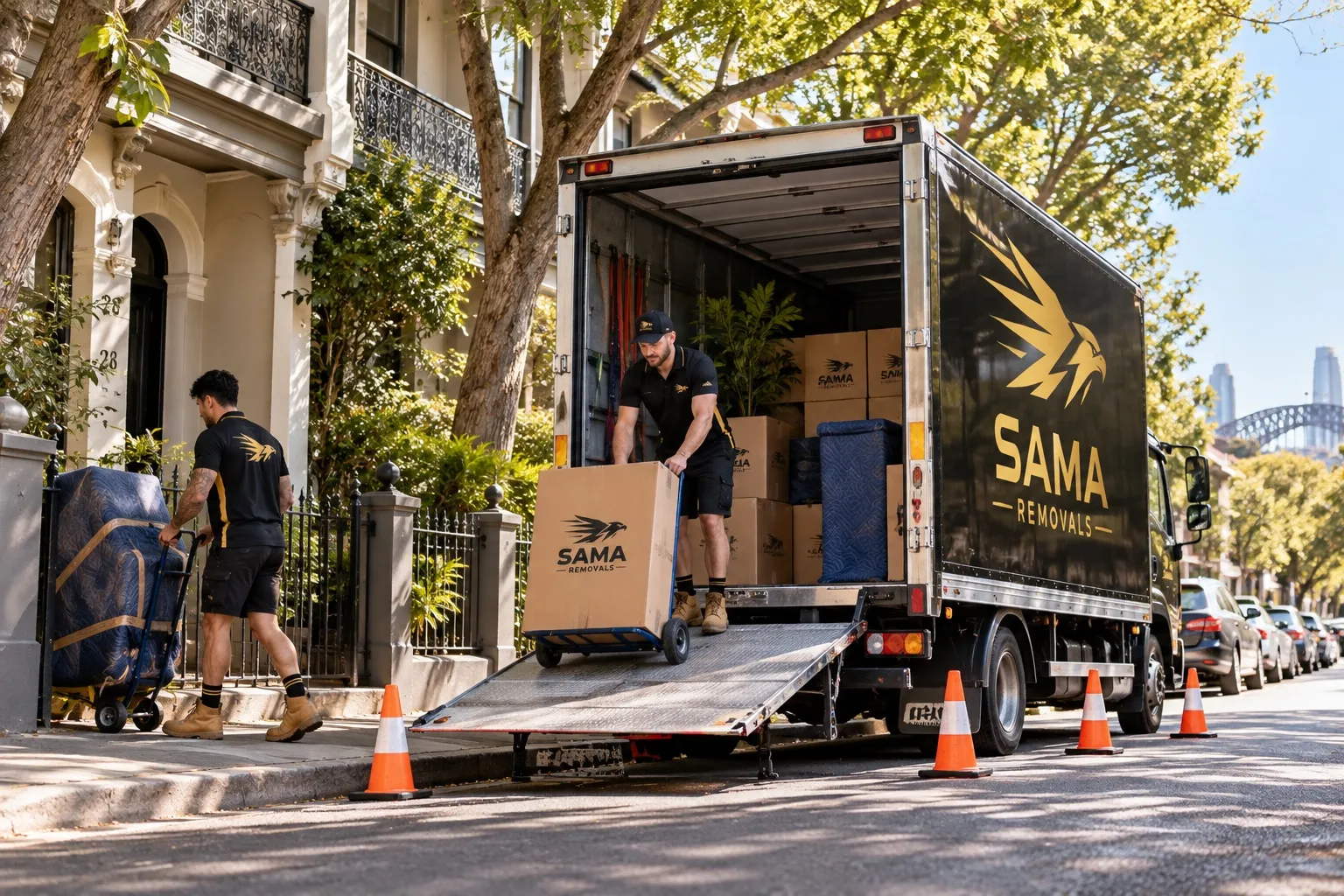
A large truck has to obey the same signs as any other vehicle, so no-stopping zones, clearways, bus zones and timed restrictions all rule out a spot even for loading. On a quiet residential street with no restrictions, the truck can often stop legally at the kerb outside the property, and a brief double-park with hazard lights while carrying an item may be tolerated but is not a right. The trouble comes on busy streets, in unit-dense pockets, and near shops or beaches, where kerb space is either metered, time-limited or simply full. That is where a reserved space earns its keep.
Council parking permits and loading zones
Most councils across Greater Sydney and the Brisbane and Gold Coast areas can reserve kerb space for a move, but they name it differently and run it differently. You might arrange a temporary parking permit, a works-zone style booking, or approval to place your own no-parking signage for the window you need. The fee, the notice required and whether an officer inspects the spot all vary by council, so check your specific council's website or ring them rather than assuming a neighbour's experience applies. If there is a marked loading zone near your entrance, the truck can use it within the posted time limit, which sometimes removes the need for a permit altogether.
Driveways and shared access
Your own driveway is the easiest access there is: no permit, no time limit, and the shortest carry from door to truck. Clear it of cars the night before so the crew can back straight in. Shared driveways, battleaxe blocks and strata car parks need a little more thought, because you cannot block a neighbour in and you have to watch height and width clearance for a tall truck. Check for low branches, tight turns, and any gate or boom gate that limits access, and let neighbours know the truck will be there for a couple of hours so nobody is caught out.
Apartment loading docks
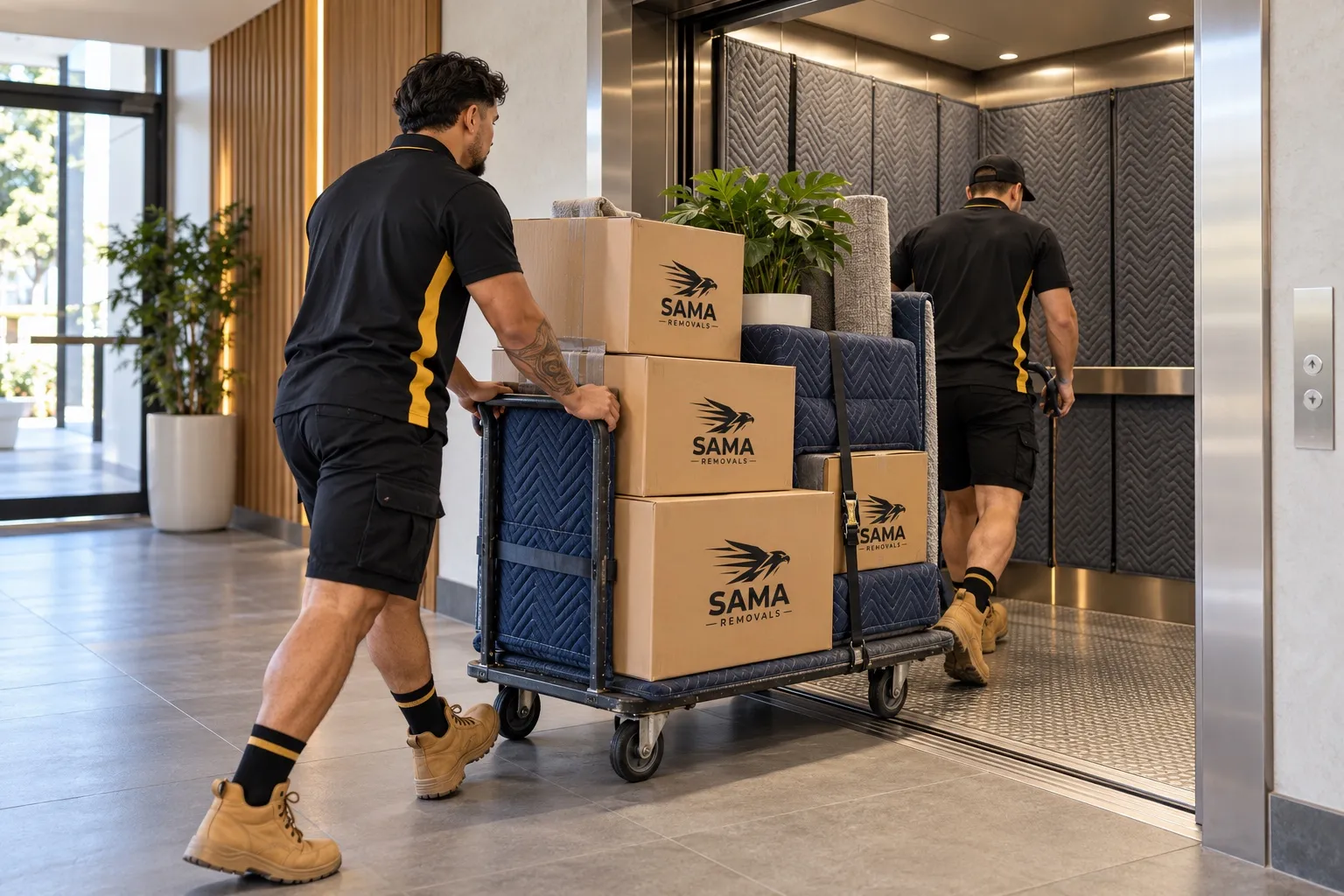
Many apartment buildings route removals through a dedicated loading dock rather than the street, and the dock is usually tied to the same booking as the service lift. Two things matter most: the booking window, which you reserve through the building manager, and the height clearance, because some basement docks are too low for a standard removal truck and force a longer carry from street level. Confirm both before the day. If your building also runs on lift bookings and certificates of currency, it is worth reading how those work in an apartment or strata move so nothing is left to the morning.
How far ahead to arrange each
Give a council permit the most lead time: one to three weeks is a safe range, and some councils want longer, especially around the end of the month when moves cluster and kerb space is scarce. Book a loading dock or service lift the moment your date is firm, because popular buildings fill their best slots early. A private driveway needs nothing but a quick word with whoever shares it and a clear run on the day. When you are unsure which of these applies to your address, tell us and we will point you to the right one.
A moving-day access checklist
Work through this a couple of weeks out:
- Read the signs on your street for no-stopping, clearway or timed limits
- Ask your council whether a permit or works zone is needed, and its lead time
- Look for a marked loading zone near the entrance you will use
- Clear your driveway, or confirm you are not blocking a shared one
- Measure dock and gateway height against a tall truck if access is undercover
- Book the loading dock and lift through the building manager
- Tell neighbours the truck will be parked out the front for a couple of hours
Common questions
Do I always need a council permit to park the truck? No. On an unrestricted street, in your own driveway, or where a loading zone is handy, you often need nothing extra. Permits matter mainly on busy or time-limited streets.
Why do the rules differ between councils? Parking is managed locally, so each council sets its own permit types, fees and notice periods across NSW and QLD. Always check the one that covers your address.
What if there is nowhere legal to stop out the front? The crew parks at the nearest legal spot and carries from there. Knowing this in advance lets us plan the load order and bring the right trolleys.
Who arranges the loading dock booking? You book it through your building manager, usually alongside the lift. Tell us the window and we schedule the crew to match it.
Truck access is one of those details that quietly decides how smoothly a move runs. Tell us your address and building when you request a quote, and we will tell you whether it needs a permit, a loading zone or just a clear driveway, then plan the day around it.